
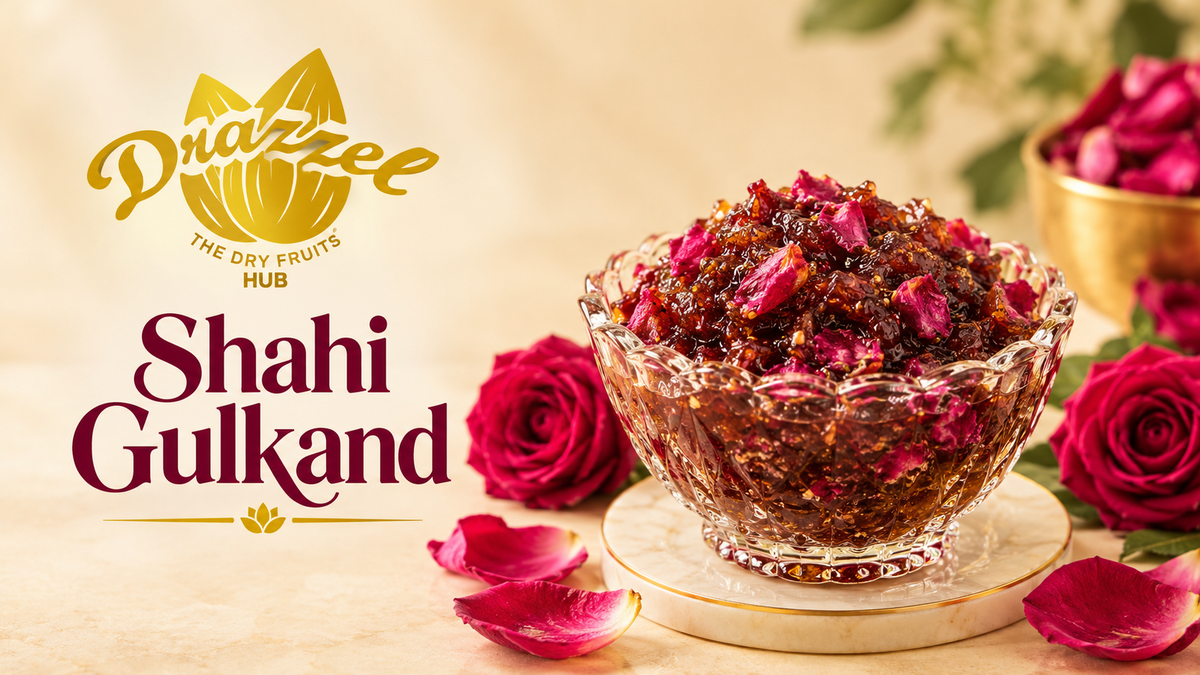
Open a jar of Shahi Gulkand and the first thing you notice is the smell. It's soft, floral, and a little sweet, like a rose garden after rain. The second thing is the texture: glossy, jammy, and dotted with tender petals.
But how does a handful of roses turn into something this smooth and fragrant? The answer is simpler than most people expect, and it takes patience more than skill. In this blog, we'll walk through how Shahi Gulkand is made, what separates a good jar from an average one, and how to enjoy it at home.
What Is Shahi Gulkand?
Gulkand is a traditional Indian preserve made from rose petals and sugar. The name comes from two words: "gul" meaning flower and "kand" meaning sweet. Families across India have made it for generations, often to serve in summer, at festivals, or alongside paan.
Shahi Gulkand takes the same idea and gives it a rich, royal finish. "Shahi" simply means royal, and it usually points to a fuller flavour, a softer texture, and a more fragrant jar. At its core, though, it's still just two things: rose petals and sugar.
Why Gulkand Has Stayed Popular for So Long
Rose preserves have a long history across South Asia and the Middle East. In India, gulkand became a household favourite, often linked with festive tables, summer drinks, and the paan served after a meal. Its appeal hasn't faded because it fits so easily into daily life. A jar of Shahi Gulkand needs no cooking, no special tools, and no planning. You open it, take a spoonful, and the rose flavour does the rest.
What Goes Into Shahi Gulkand?
The ingredient list is short, which is exactly why quality matters so much.
Rose petals. Fragrant varieties work best. The smell of the finished jar depends almost entirely on the petals, so fresh, aromatic ones make a clear difference.
Sugar. Sugar does two jobs here. It sweetens the preserve, and it draws moisture out of the petals so they soften and keep well over time.
Some homes add a little cardamom or fennel. Many jars keep things simple. The Drazzel Shahi Gulkand ingredient list is straightforward: rose petals and sugar.
How Shahi Gulkand Is Made: Step by Step
The traditional method hasn't changed much over the years. Here's how it usually goes.
1. Choose the petals. Makers pick fresh, fragrant rose petals and remove anything wilted, bruised, or discoloured. Only clean, healthy petals go forward.
2. Wash and dry them well. The petals are rinsed gently, then spread out on a clean cloth to dry fully. This step matters. Leftover water can spoil the batch, so the petals need to be dry to the touch.
3. Layer with sugar. Petals and sugar are packed into a clean glass jar in alternating layers. Many recipes use roughly equal weights of each. The petals are pressed or lightly crushed so they release their natural juices.
4. Cover and cure. The jar is covered with a fine cloth and left in gentle sunlight for a few weeks. This slow curing lets the sugar dissolve, the petals soften, and the flavour deepen.
5. Stir and wait. During this time, the mixture is stirred every day or two. Slowly, it thickens into a glossy, jam-like preserve with a deep rose colour.
6. Rest and pack. Once the petals are soft and the syrup is thick, the gulkand is ready to be filled into clean, dry containers.
That's the whole process. No complicated steps, just time, sunshine, and care.
Common Mistakes When Making Gulkand at Home
If you'd like to try making a small batch yourself, a few mistakes show up again and again.
-
Using wet petals. Even a little water can cause spoilage, so dry the petals fully before layering.
-
Choosing the wrong roses. Florist roses are often treated with chemicals. Use pesticide-free roses grown for eating, preferably fragrant ones.
-
Skimping on sugar. Too little sugar means the petals don't cure properly and the jar can spoil.
-
Using a damp or dirty jar. Always start with a clean, fully dry glass jar.
-
Rushing the curing. Hurrying the process leaves the petals hard and the flavour flat.
Because these details are easy to miss, many people prefer to buy a ready-made jar from a brand they trust.
Sun-Cured vs Stove-Cooked Gulkand
You'll come across two common methods.
Sun-cured gulkand is the traditional way. It takes weeks, but the slow process keeps the aroma of the roses gentle and natural. The texture tends to be soft and the flavour smooth.
Stove-cooked gulkand is faster. The petals and sugar are heated until thick. It saves time, but if the heat runs too high or too long, the delicate rose fragrance can fade.
Neither method is wrong. What matters is that the maker pays attention to heat, hygiene, and timing, because these decide how the final jar tastes.
What Makes a Good Jar of Shahi Gulkand?
Not every jar is made equally. A few simple checks can help you judge quality.
-
Fragrance. A good jar smells clearly of roses, not just of sugar.
-
Texture. It should feel soft and spreadable, with petals that are tender rather than hard or stringy.
-
Colour. A deep, natural rose or reddish tone is a good sign. Be cautious of colours that look too bright or artificial.
-
Ingredients. Look for a short list. Rose petals and sugar should be the main players.
-
Sweetness balance. It should taste floral first and sweet second, not like plain sugar syrup.
-
Clean packing. The container should be sealed properly and free of moisture or leakage.
How to Enjoy Shahi Gulkand at Home
Shahi Gulkand is easy to use because it works in both sweet and simple everyday dishes. Here are some ways to eat it:
-
Take a small spoonful as a sweet treat.
-
Stir it into warm or chilled milk.
-
Blend it into yoghurt, smoothies, or shakes.
-
Use it as a filling for paan or homemade sweets.
-
Spread it on toast, paratha, or other breakfast favourites.
-
Add a spoonful to ice cream, kulfi, or cake.
Start with a small serving and adjust to your taste. A little goes a long way because the flavour is strong.
How to Store Shahi Gulkand
Good storage keeps the aroma and texture in place for longer.
-
Keep the jar in a cool, dry place, away from direct sunlight, heat, and moisture.
-
Close the lid tightly after every use.
-
Always use a clean, dry spoon. Water or crumbs can spoil the jar.
-
Don't leave it open on a warm counter for long.
These small habits protect the flavour and keep the preserve smooth.
Why Choose Drazzel Shahi Gulkand?
Drazzel Shahi Gulkand is made with rose petals and sugar, and it comes in 500g and 1kg sizes, so you can pick what suits your household. It carries a rating of 4.5 from 183 verified reviews, and its soft, spoonable texture makes it easy to use in drinks, desserts, and breakfast dishes.
Bring Home a Jar of Shahi Gulkand
Gulkand looks humble, but there's real care behind every jar. Fresh petals, patient curing, and a short ingredient list are what give Shahi Gulkand its soft texture and gentle rose flavour. Once you know how it's made, you'll also know what to look for when you buy it.
Ready to taste it for yourself? Order Drazzel Shahi Gulkand today and add a spoonful of rose to your day.
Frequently Asked Questions
1. What is Shahi Gulkand made of?
Shahi Gulkand is made from rose petals and sugar. Some homemade versions add spices like cardamom, but the base is always petals and sugar.
2. How long does it take to make gulkand?
The traditional sun-cured method usually takes a few weeks, because the sugar and petals need time to blend and thicken. Stove-cooked versions are quicker, but the flavour can be less delicate.
3. How do I eat Shahi Gulkand?
You can eat a small spoonful on its own, mix it into milk or yoghurt, spread it on toast or paratha, or add it to desserts like kulfi and ice cream. Start small and adjust to your taste.
4. How should I store Shahi Gulkand?
Keep it in a cool, dry place away from sunlight and heat. Close the lid tightly after each use and always scoop with a clean, dry spoon.
5. Is gulkand the same as rose jam?
They're similar, but not identical. Gulkand is traditionally made by curing rose petals with sugar, usually giving a softer, more petal-rich texture. Rose jam is often cooked and may be smoother or more uniform.