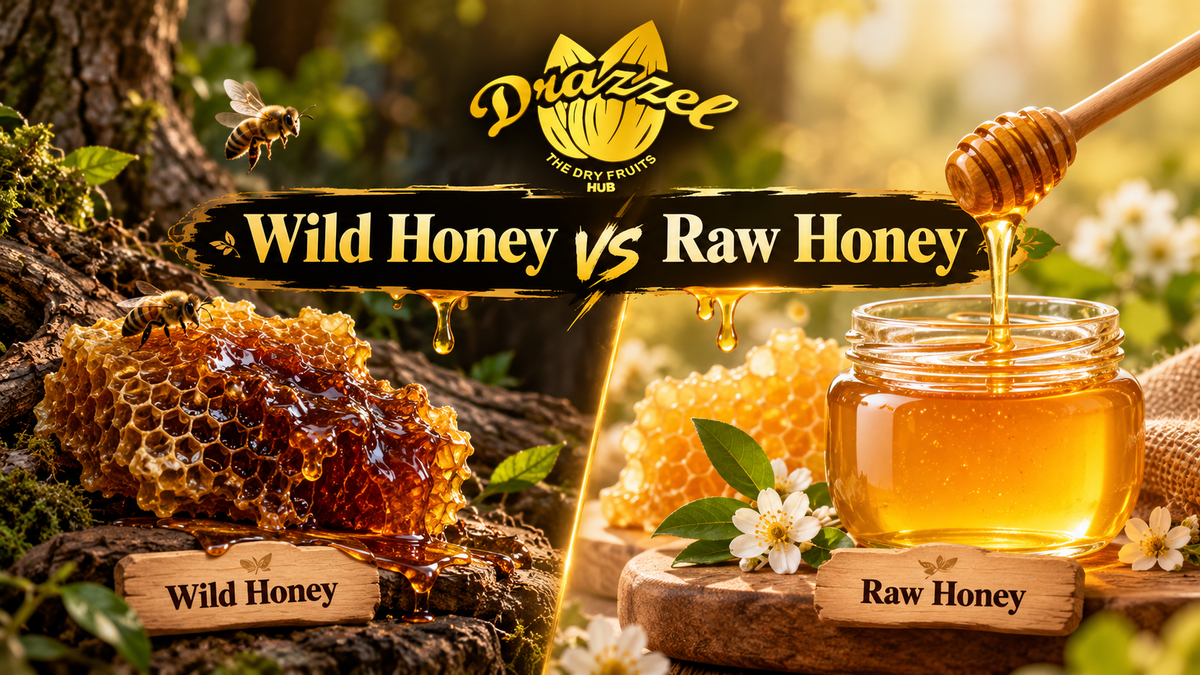
Wild honey and raw honey are not the same thing. Many shops put both words on the label, and people often use them as if they mean one product. They do not. One word tells you where the honey came from. The other tells you how the honey was handled after it was collected. This blog explains both in simple words and shows you how to read a honey label.
What Does Raw Honey Mean?
Raw honey is honey that has not been heated much and has not been filtered heavily. The beekeeper takes the honey out of the comb, strains it lightly to remove big pieces of wax, and fills the jar. That is nearly all.
Because it is not heated, raw honey keeps its natural thick texture. You may see tiny bits of pollen or wax in it. Most of the honey sold in supermarkets is different. It is usually heated and filtered to make it clear, smooth and liquid for a long time on the shelf.
One thing to know: there is no single strict rule in India for the word "raw". Some sellers use it loosely. So the word on the front of the jar is not enough, and the rest of the label matters.
What Does Wild Honey Mean?
Wild honey is made by bees that live in the wild. They build their hives on tall trees, rocky cliffs and in forests. Nobody keeps these bees in boxes or feeds them. They take nectar from whatever flowers grow near the hive.
Regular farm honey comes from bees kept in wooden boxes by a beekeeper. So wild honey is about the source. It tells you who made the honey and where.
The word "wild" also has no strict legal meaning in India. A good seller will tell you where the honey was collected and when.
The Difference in One Line
Raw honey describes how the honey was handled. Wild honey describes where the honey came from.
That is why a jar can be both, or only one of them, or neither. The two words are answering two different questions.
Four Kinds of Jars You May Find
Once you see the difference, the labels start to make sense.
-
Wild and raw. The honey comes from wild hives, and it was lightly strained and not heated. This is the kind many people mean when they ask for natural honey.
-
Wild but heated. The honey comes from wild hives, but it was heated or filtered a lot. It can look clear and smooth, even though the source is wild.
-
Farm and raw. The honey comes from boxes on a farm, and it was lightly strained and not heated.
-
Farm and heated. The honey comes from boxes on a farm, and it was heated and filtered. This is the regular honey in most shops.
So when a jar says only "raw", you do not know if the bees were wild or farmed. And when a jar says only "wild", you do not know how the honey was processed. Ask the seller, or look for the details on the label.
How They Look and Taste
Raw honey is usually thick and a little cloudy, and the colour changes from batch to batch.
Wild honey often has a stronger and deeper taste, because the bees feed on many forest flowers. One batch may be a little sour and bold. The next may be light and flowery. A jar of wild honey that is also raw usually shows both things: a thick texture and a taste that is not the same each time.
Heated, filtered honey looks clear and tastes mild and evenly sweet.
Why Raw Honey Gets Thick or Grainy
Raw honey often turns thick, creamy or grainy after a few weeks. This is called crystallisation, and it is natural. The sugars in honey slowly form small crystals, mostly in cool weather.
It does not mean the honey is fake or has gone bad. Honey that stays perfectly liquid for many months has often been heated and filtered.
To make it smooth again, put the closed jar in a bowl of warm water for 15 minutes. Do not use a microwave or boiling water, because strong heat can change the taste.
Is Raw or Wild Honey Healthier?
Raw honey may keep a little more of its natural pollen and enzymes, because it is not heated. Wild honey has a strong, deeper taste. But there is no strong proof that either one is much healthier than regular honey. All honey is mostly sugar, so eat it in small amounts.
No honey is a medicine. Be careful of sellers who say a jar can cure an illness.
Why Wild Honey Costs More
Wild honey usually costs more than raw honey from a farm. It is collected from hives in forests and on cliffs, which is slow, tiring and risky work. A collector gets only a small amount from each hive, and the harvest comes once or twice a year.
Raw honey from a farm does not have these problems, so its price is often closer to regular honey. A jar that is both wild and raw is usually at the higher end. If you see a big jar of "wild raw honey" at a very low price, be careful.
How to Read a Honey Label
Read the whole jar, not just the front. These points help.
Ingredients. It should say honey and nothing else. If you see sugar, glucose or syrup, do not buy it.
Source. Look for a region or forest name and a collection season. A seller who is proud of the honey tells you this.
Processing. Look for words like "not heated", "unprocessed" or "lightly strained". If the label says nothing about processing, ask.
Batch and FSSAI number. Both should be printed clearly. They show that the seller can be traced if something goes wrong.
How to Spot a Fake
Because natural honey costs more, some sellers mix sugar syrup into it. Watch for these signs.
-
A very low price for a big jar
-
No details about where the honey came from
-
No batch number or FSSAI number
-
A flat, plain sweet taste with no depth or sourness
Kitchen tests like the water test or the thumb test are not reliable. Thick sugar syrup can pass them. A lab report or clear batch details from the seller are a better sign.
Which One Should You Buy?
It depends on what you want.
If you use honey only for tea or for cooking sweets, regular honey is fine, and you do not need to spend extra.
If you like thick, natural honey and care about how it is handled, look for raw honey.
If you enjoy a stronger, deeper taste and want to know that the bees were wild, look for wild honey. If it is also raw, that is even better.
Start with a small jar. If you like it, buy a bigger one next time.
Safety Notes
Never give any honey to a baby under one year old. It can carry bacteria that are harmful to very small babies. This is true for raw, wild and regular honey.
Honey has a lot of sugar, so people with diabetes should ask their doctor how much is safe. If you are allergic to pollen, start with a very small amount of any lightly filtered honey.
How to Store Honey
Keep the jar closed in a cool, dry place and use a clean, dry spoon every time. Water can spoil honey. Do not keep it in direct sunlight or near the stove.
Want to taste the difference yourself? Order Drazzel Wild Honey today and add a richer, more natural taste to your daily routine.
Frequently Asked Questions
Is wild honey the same as raw honey?
No. Wild honey means the honey was made by wild bees. Raw honey means the honey was not heated much or filtered heavily. A jar can be both, one of them, or neither.
Is raw honey always wild honey?
No. Raw honey can come from bees kept in boxes on a farm. The word "raw" tells you about processing, not about the bees.
Is wild honey always raw?
No. Wild honey can also be heated or filtered a lot. If you want it raw, check the label or ask the seller.
Why does raw honey turn thick or grainy?
The natural sugars in honey form small crystals over time. This is normal and not a sign of spoilage. Keep the jar in warm water for a few minutes to make it smooth again.
Can children eat raw or wild honey?
Children over one year old can eat small amounts. Never give honey of any kind to a baby under one year old.